
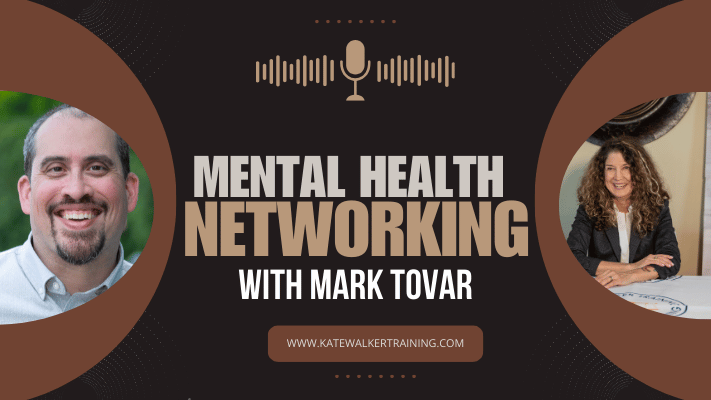
The Power of Mental Health Networking: Lessons from My Conversation with Mark Tovar
- Date September 6, 2024
Mark and I have known each other for a while, and I knew he had some great advice to share. What I didn’t expect was the level of vulnerability and realness he brought to our discussion. Mark opened up about the highs and lows of networking in the mental health world, sharing personal stories, practical advice, and even some lessons learned from a not-so-great networking experience. This conversation was both inspiring and eye-opening, and I’m excited to share some of those takeaways with you.
TCCBB #98: The Power of Mental Health Networking: Lessons from My Conversation with Mark Tovar
Converting from Introvert to Extrovert: A Networking Journey
Let’s start with a little background. I’ve always identified as an introvert, and for years, networking wasn’t my thing. Mark laughed when he shared that he would see me energetic at an event, and quickly retreat to a corner, coffee in hand, to recharge. He totally understood.
“I’m asking all of my counselors to scooch just a little bit in their mind to not make introvert, extrovert, and networking synonymous,” Mark said. He wanted to challenge the idea that only extroverts can be good at networking. “The truth is, most of you see 25 to 35 people a week, and guess what? They’re strangers, and you do really well making connections and building relationships.”
That really struck me because it’s so true! As therapists, we’re in the business of building connections, so why should networking feel so intimidating? Mark emphasized that therapists have a natural advantage when it comes to mental health networking. We already know how to connect deeply with people, and we should leverage those skills in professional settings. He reminded me that networking doesn’t have to look like it does for other industries—it can be as simple as showing up, being yourself, and letting conversations flow naturally.

A Cautionary Tale: The Dangers of Bad Networking
Mark also shared a more cautionary side of networking—one that therapists don’t always talk about. He opened up about a negative experience he had in a therapist networking group that went off the rails. This group, which had started out strong, eventually became a problematic space due to unethical behavior and financial mismanagement by its leader.
“I found my people,” Mark explained. “These are the people I’m going to spend money on… and I sign up for the retreat… everything was wonderful, fantastic. But then we found out the therapist running it had their own issues—mismanagement of money, CEUs unpromised—and out of 4,000 therapists, only two people spoke up in two years.”
This was a huge lesson for Mark—and for all of us. It’s easy to get swept up in the excitement of a new group, but it’s important to do your due diligence and make sure the group is operating ethically and professionally.
Mark’s story reminds us that networking, like any relationship, requires trust. And when that trust is broken, it can affect your reputation, finances, and professional connections.
Building a Community, Not Just a Network
One of the most powerful messages Mark shared during our conversation was the idea of building a community, not just a network. Networking isn’t just about collecting business cards or making surface-level connections; it’s about finding people you can trust and grow with.
Mark talked about how, after his negative networking experience, he decided to take control and create his own networking group—one that would focus on genuine relationships and mutual support. “I tricked two of my therapist friends into meeting for coffee,” he joked. “I said we’d talk business, but really I just wanted to hang out.”
What started as a small coffee group has since grown into a thriving community of therapists who meet monthly, with no pressure to sell or perform. “Now we’ve got about 20 people at any given meeting. We pick a different place each time and just talk—no judgment, no negative comments, and absolutely no selling.”
This approach to mental health networking is so refreshing. It takes the pressure off and allows therapists to connect in a more authentic way. Mark’s group focuses on the unique needs of therapists—everything from clinical supervision to personal well-being—and it’s all done in an atmosphere of trust and camaraderie. It’s a model I think many of us could benefit from.
Reframing Networking as Self-Care
As mental health professionals, we spend so much time caring for others that we often forget to care for ourselves. Mark’s story reminded me that networking can be a form of self-care, especially when it’s done in a supportive community.
“We are some of the worst with self-care,” Mark said, pointing out that therapists are notorious for overworking and under-prioritizing our own needs. His networking group was born out of a desire to change that. “At that point in my life, I absolutely needed that [group], and I can’t really tell you if it helped my business, but I’m pretty convinced that if it wasn’t for that group, I might be down to maybe one or two days a week.”
Mark’s message is clear: building a supportive community of like-minded therapists can help prevent burnout and foster resilience. It’s not just about growing your business—it’s about finding your tribe and making sure you’re taking care of yourself along the way.
Practical Tips for Mental Health Networking Success
If you’re feeling inspired to dive into mental health networking but aren’t sure where to start, Mark offered some great practical advice during our conversation.
1. Start With What You Know
Networking doesn’t have to be intimidating. Start by connecting with people you already know—colleagues, friends, or other therapists in your community. You don’t have to jump into a huge networking event right away.
2. Be Genuine
“Wherever two or more of you are gathered, you are networking,” Mark said. Don’t worry about putting on a show. Just be yourself and focus on building real relationships.
3. Look for Unique Opportunities
Mark mentioned that traditional networking events (like Chamber of Commerce meetings) didn’t always work for him. Instead, he found success by joining groups that were more aligned with his personal interests and the needs of his clients. Find what works for you!
4. Build Your Own Community
If you can’t find the right networking group, create your own! Mark’s group grew from just two friends having coffee to a thriving, supportive network. You can do the same by starting small and focusing on relationships over sales.
Mental Health Networking & Finding Your Tribe
At the end of our conversation, Mark shared one final piece of advice: “You need a tribe. You need some people around you who are like, ‘You know what? I like you. You’re a cool cat. I think you can do neat stuff.’ And guess what? If you fail, that’s okay.”
Mental health networking isn’t just about growing your practice or finding referrals—it’s about finding the people who will support you, lift you up, and remind you that you’re not in this alone. As therapists, we give so much to our clients, but we also need to invest in ourselves by building a strong, supportive professional community.
If you haven’t dipped your toes into mental health networking yet, now is the time! Start small, be genuine, and remember that the best connections come from a place of trust and authenticity.
Action Items:
If you liked this episode of Texas Counselors Creating Badass Businesses, please subscribe and leave a fabulous review!
Mark your calendar for the Thursday 30 Live quick training at 9:30 CST over on the Texas Counselors Creating Badass Businesses Facebook page.
Want More Interviews?
Listen to my conversation about SEO for Counselors with Jenny Melrose or my chat with Sarah Rivera about maximizing growth and efficiency!
Tag:counseling, counseling networks, counseling practice, counseling private practice, how to network, licensed marriage and family therapist, licensed professional counselor, mental health networking, mental health practice, networking for therapists, Streamline Your Business, success, the dangers of bad networking, therapy interview, why is networking important

Kate Walker, Ph.D., LPC-S, LMFT-S, creator of Texas’s first online 40-hour supervisor training course. She provides continuing education, supervision training, and resources for counselors who want to grow sustainably and ethically.
Choosing the Right Online Supervision Course: A Peek Behind the Curtain
You may also like


Evaluation Habits That Hold Up with Dr. Ashley Durbin
