
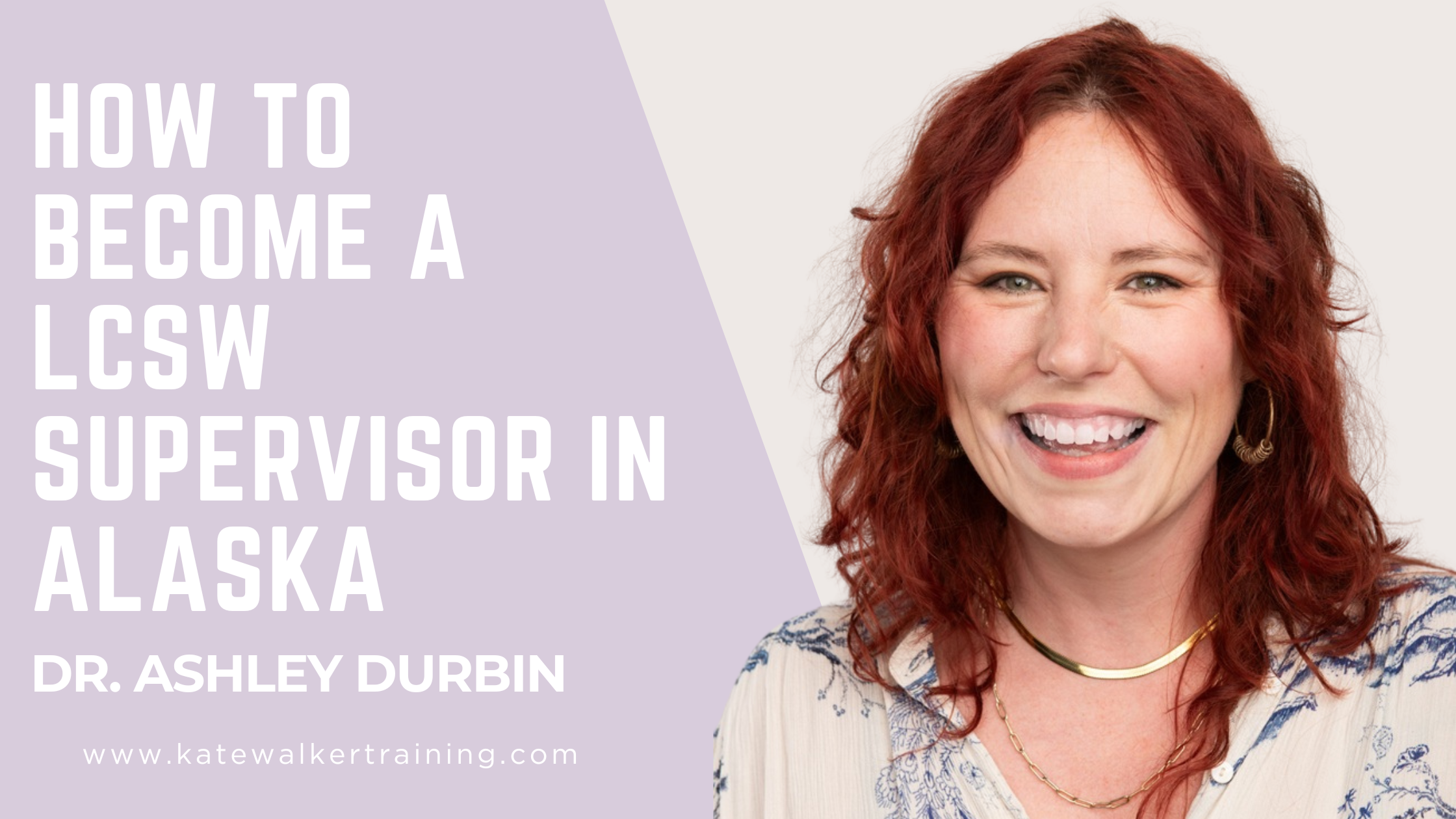
How to Become a LCSW Supervisor in Alaska
Alaska Social Work Licensure
How to Become a Clinical Social Work Supervisor in Alaska
Everything you need to know about Alaska's new supervisor requirements — before June 30, 2026 changes everything.
So, you're a Licensed Clinical Social Worker in Alaska, and you've been thinking about taking the next step — becoming a clinical supervisor. Maybe you're feeling the weight of direct-service burnout and wondering if there's a way to keep giving back without grinding yourself down. Maybe you're watching new graduates struggle to find solid supervisors in your area, and something in you is saying, “I could do that.” Or maybe you're just ready to diversify what your career looks like before another long winter arrives.
Whatever brought you here, know this: becoming a clinical social work supervisor in Alaska is one of the most meaningful expansions a seasoned LCSW can make. You get to shape the next generation of clinicians serving Alaskans — from Juneau to Fairbanks to the most rural corners of the state. And right now, with new supervisor regulations taking effect after June 30, 2026, there's never been a better time to get ahead of the curve.
Let's walk through exactly what it takes.
Why Become a Supervisor? (The Case for Taking This Step)
Clinical supervision in Alaska isn't just a career add-on — it's a genuine need. Alaska faces persistent shortages of qualified clinical supervisors, particularly outside of Anchorage. For LMSWs working their way toward clinical licensure, finding a supervisor who meets board requirements can be genuinely hard. That's a gap you can fill.
Beyond the workforce impact, supervision offers something direct therapy often can't: a different kind of engagement with the work. You're still in the room with the complexity and nuance of clinical social work — you're just one step removed from the client, thinking at a systems level, teaching ethical reasoning, and watching someone grow into the clinician they're becoming. It's exhausting in a very different way than holding a full caseload.
“Every single day you wait is a day further from decreasing burnout and diversifying your income.”
And yes — supervision can also create income diversity. Group supervision models, in particular, allow experienced clinicians to work with multiple supervisees in one session, making a meaningful difference in both reach and revenue.
Do You Qualify? The Basic Requirements
Before we get into the how, let's confirm the who. To supervise LMSWs seeking clinical licensure in Alaska, you need to hold an unrestricted LCSW license — either in Alaska or another jurisdiction. A psychologist or psychiatrist with an unrestricted license may also provide supervision under current rules.
⚠️ Important heads up for 2026: New regulations under 12 AAC 18.113 are set to take effect after June 30, 2026. If you plan to supervise beyond that date, or if supervisees' hours will extend past it, you'll want to meet the new standards now. Read on — they're not complicated, but they matter.
Alaska's New Clinical Supervisor Requirements (Effective After June 30, 2026)
The Alaska Board of Social Work Examiners has proposed updated regulations for clinical supervisors that go significantly beyond just holding an active license. Under 12 AAC 18.113, clinical supervisors will need to meet the following:
1 At Least Three Years of Licensed Clinical Experience
You must have a minimum of three years of experience as a licensed LCSW, psychologist, or psychiatrist. This is post-licensure experience — your years as an LMSW don't count toward this requirement.
2 An Unrestricted License — Throughout the Supervision Period
Your license must remain unrestricted for the entire period during which you are supervising. Any disciplinary action, restriction, or lapse in licensure creates problems for both you and your supervisees. Stay current on renewals.
3 Six Initial Hours of Supervision-Specific CE
Before (or as you begin) supervising, you'll need to complete at least six hours of continuing education specifically focused on supervision or supervisory practices. This isn't general CE — it must address supervision as a distinct clinical skill.
4 Six Additional Supervision CE Hours Each Renewal Cycle
Ongoing supervisors will need to maintain six hours of supervision-focused CE every two-year licensing period thereafter. Think of this as the board's way of ensuring supervisors keep growing their craft — not just doing it, but actively studying it.
5 A Maximum Number of Supervisees
The proposed regulations will also cap how many supervisees a single supervisor can work with at one time. Exact figures will be finalized with the new regulations, so watch the Alaska Board of Social Work Examiners for official updates at SocialWorkExaminers@Alaska.Gov.
Pro tip: Even if your supervisees' hours will be completed before June 30, 2026, it's smart to meet the new standards now. It builds credibility with supervisees, positions you well for the post-2026 environment, and frankly — six hours of supervision training will make you a genuinely better supervisor from day one.
What Clinical Supervision in Alaska Actually Requires
Understanding what you need to do as a supervisor means understanding what your supervisees need from you. Here's the breakdown of what Alaska's Board of Social Work Examiners requires of each supervisory relationship:
The Hour Requirement
Your supervisees must complete at least 100 hours of direct clinical supervision, equitably distributed across their two-year postgraduate period. Of those 100 hours, no more than 50 can be group supervision (unless the board grants an exception). As the supervisor, you're responsible for tracking and documenting these hours accurately.
Format Matters
All supervision must be face-to-face and synchronous — meaning you and the supervisee can see and hear each other simultaneously, whether in person or via synchronous secure video (telehealth platforms work for this, as long as they're truly live). Asynchronous methods — recorded sessions, emails, written feedback alone — do not count as direct clinical supervision hours.
What You Must Cover
Alaska regulation 12 AAC 18.115 specifies that clinical supervision must address all six of the following content areas:
Required Supervision Content Areas
- Clinical skills — assessment, diagnosis, treatment planning, psychotherapy techniques.
- Practice management skills — documentation, caseload management, professional systems.
- Skills required for continuing competence — staying current, recognizing limits of competence.
- Professional identity development — what it means to be a social worker, not just a therapist.
- Ethical practice — application of the NASW Code of Ethics in real clinical situations.
- Legal and regulatory requirements — Alaska statutes, board rules, mandatory reporting, confidentiality.
This isn't a checklist you complete once. These are ongoing, integrated conversations across the full supervision period. Good supervision weaves all six areas into the work naturally, session by session.

A Word About Alternate Supervision Arrangements
Alaska does allow for supervisees to work with alternate supervisors — for example, a licensed marital and family therapist or licensed professional counselor — but only under specific conditions. The supervisee must submit an Alternate Supervision Form (#08-4944) detailing why a standard supervisor (LCSW, psychologist, or psychiatrist) isn't available, and the board must vote to approve the arrangement before supervision begins. Hours counted prior to approval will not be accepted.
As a supervisor, you may also encounter supervisees who need the board's pre-approval for alternate supervision formats. Encourage any supervisee with unusual circumstances to contact the board before starting — not after. The board's email is SocialWorkExaminers@Alaska.Gov.
Your Paperwork Responsibilities as a Supervisor
Supervision in Alaska involves real documentation, and it's worth knowing this before you take on a supervisee. At the conclusion of each supervision period with a supervisee, you'll need to complete the board's Postgraduate Clinical Social Work Supervision Form, which requires you to report:
The total hours the supervisee was employed in a clinical social work position during the period, the total hours of individual clinical supervision you provided, and the total hours of group clinical supervision provided. You'll also indicate the content areas addressed and attest to the supervisee's clinical work.
Documentation Reminder
- Keep your own records of each supervision session — date, duration, format (individual vs. group), and content areas covered.
- Complete supervision forms promptly at the end of each employment period, not retroactively months later.
- Note that even if you do not recommend a supervisee for licensure, their hours and supervision period still count — so complete the form accurately regardless.
- Your signature on the form may also serve as one of the supervisee's three required professional references, so both forms may be needed.
Step-by-Step: How to Become a Clinical Supervisor in Alaska
1 Hold an Active, Unrestricted LCSW License for at Least Three Years
Once you have three or more years of post-licensure clinical experience, you're eligible to supervise under the new regulations taking effect after June 30, 2026. Make sure your license is in good standing — no restrictions, no lapses.
2 Complete Six Hours of Supervision-Specific Continuing Education
Find CE coursework specifically focused on clinical supervision practices. Look for courses through ASWB-approved providers that address supervision models, ethical dimensions of supervisory relationships, and documentation requirements. These six hours are separate from your general 45-hour renewal CE requirement.
3 Stay Current on Your General CE Requirements
Alaska LCSWs must complete 45 CE hours every two years (renewed by June 30 of even-numbered years). This includes at least 10 live or synchronous hours, 3 hours of professional ethics, 6 hours in substance abuse, 3 hours in suicide education, 3 hours in teletherapy practice, and cross-cultural education including Alaska Native-related content.
4 Establish Your Supervision Practice
Decide how you want to offer supervision — individual sessions, group supervision, or a mix of both. Clarify your schedule, your fee structure if private, and your approach to supervision contracts. Many supervisors develop a written supervision agreement with each supervisee that outlines expectations, meeting frequency, and documentation responsibilities.
5 Maintain Six Hours of Supervision CE Each Renewal Period
Once you're actively supervising, you'll continue to complete six hours of supervision-focused CE every two-year renewal cycle. Build this into your CE planning so it doesn't sneak up on you at renewal time.
6 Contact the Alaska Board with Questions
Alaska's Board of Social Work Examiners is your primary resource. Reach them at SocialWorkExaminers@Alaska.Gov or by phone at (907) 465-2572. If you have questions about a specific supervisee situation or alternate supervision arrangements, get written confirmation before proceeding.
The Bigger Picture: Why Alaska Needs You to Do This
Alaska has some of the most complex clinical social work practice contexts in the country. Clinicians here work across urban settings and extremely remote communities, with populations that have high rates of trauma exposure, substance use disorders, and limited access to mental health resources. The supervisors who guide the next generation of LCSWs in Alaska aren't just fulfilling a regulatory function — they're shaping the clinical culture of an entire state.
That's worth something. And with the new supervisor regulations establishing a clear, formalized pathway, you now have a concrete roadmap to make it official.
You've put in the years. You've sat with the hard cases. You know things that only come from time in the chair. Now it's time to pass that forward.
Visit the Alaska Board of Social Work Examiners →
Regulations are subject to change. Always verify requirements directly with the Alaska Board of Social Work Examiners before making clinical or career decisions.
This post is for informational purposes only and does not constitute legal or licensing advice. Requirements are based on Alaska Statutes (AS 08.95), 12 AAC 18, and the Alaska Board of Social Work Examiners' published guidelines as of 2025–2026. Always confirm current requirements at commerce.alaska.gov or by emailing SocialWorkExaminers@Alaska.Gov.

You may also like

Immersive Learning vs AI: Why You Don’t Want an AI Experience

