
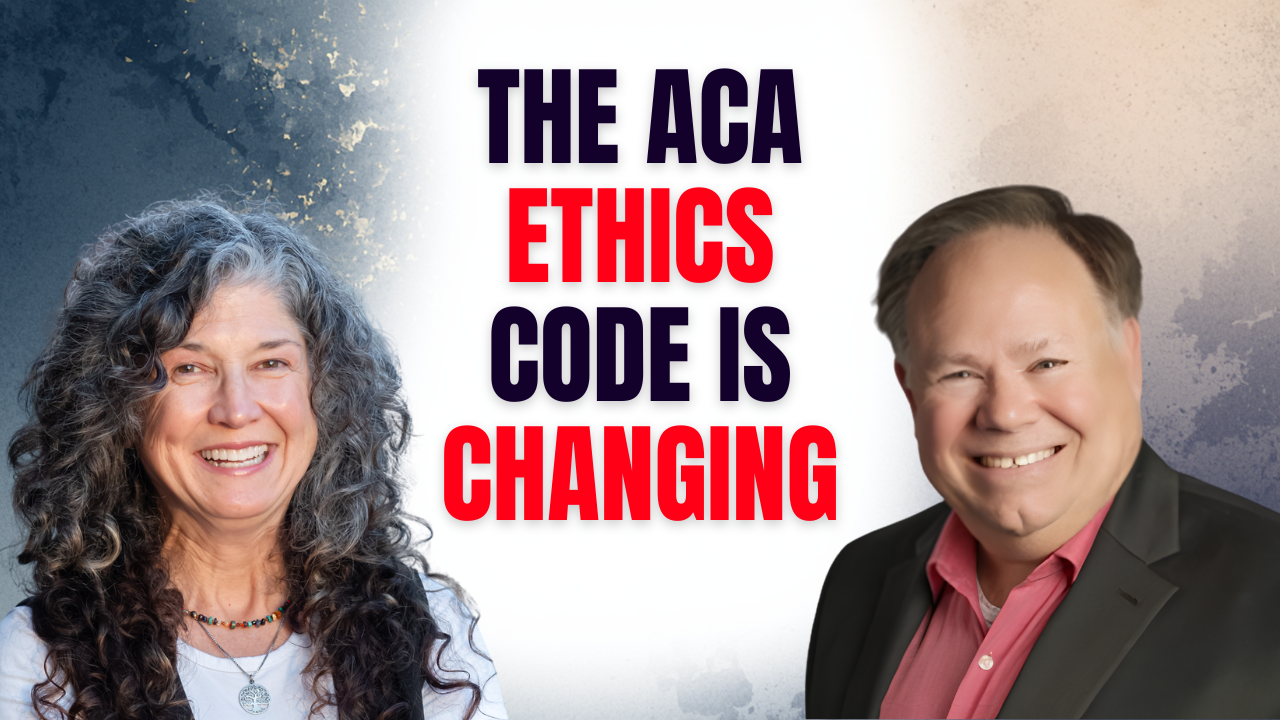
ACA Code of Ethics 2026 Updates With Dr. Bret Hendricks Ed.D, LPC-S
Badass Therapists Building Practices That Thrive #197 ACA Code of Ethics 2026 Updates With Dr. Bret Hendricks Ed.D, LPC-S
ACA Code of Ethics Changes Every Supervisor Needs to Know
As of this recording, the ACA Code of Ethics is being rewritten. That means if you practice counseling, supervise associates, teach counseling students, or manage clinicians, these updates affect your daily work. And not in an abstract way. These changes shape documentation, boundaries, supervision structure, workplace advocacy, and even how we think about counselor wellness.
I invited Dr. Bret Hendricks to walk us through the proposed revisions because he served directly on the ACA Ethics Code task force. This was not a conversation built on rumors or interpretations. This was a firsthand explanation of what the committee discussed, what changed, and why those changes matter for practicing counselors and supervisors.
One thing I appreciated immediately was hearing how intentional this process has been. The task force spent months reviewing sections line by line, gathering stakeholder feedback, and debating language carefully. Dr. Hendricks kept repeating something I think supervisors need to hear: this is our code. If counselors want the profession to remain self-governed, we have to participate in the process.

The Shift From Impairment to Wellness
One of the biggest updates involves counselor wellness. Historically, ethics language focused heavily on impairment. The proposed revisions still address impairment, but now they also explicitly require counselors to monitor their wellbeing and develop personal self-care strategies.
I see this come up all the time with supervisors. Associates wait until they are exhausted before they acknowledge something is wrong. Then suddenly the documentation slips, boundaries get blurry, and ethical decision-making becomes reactive instead of intentional.
Dr. Hendricks explained that the new language reframes wellness as foundational to ethical practice. That matters because wellness is no longer treated as optional or aspirational. It becomes part of professional responsibility.
Supervisors can operationalize this by helping supervisees create observable self-care plans that include:
- Consultation practices
- CE participation
- Therapy when appropriate
- Documentation routines
- Workload boundaries
- Rest and recovery strategies
This aligns closely with what I teach in my work around sustainable supervision systems. Ethical practice does not happen accidentally. It requires structure.
Why the “Professional Will” Is Important
Another significant addition is the requirement for counselors to establish a professional will. This section addresses something many clinicians avoid thinking about: what happens to client records if a counselor dies, retires, becomes incapacitated, or unexpectedly closes a practice.
I cannot tell you how many times clinicians assume they will “figure that out later.” But ethically, later is too late.
The proposed code requires counselors to identify a records custodian and explain this process within informed consent documentation. Clients should understand how records will be accessed if something interrupts practice continuity.
What stood out to me during this discussion was how practical this change really is. We spend so much time teaching treatment planning and risk management, but many clinicians never build continuity plans for their own business operations.
Ethics are not separate from business structure. Documentation systems, policies, and continuity planning are ethical responsibilities.
Administrative Supervision Finally Gets Specific
This may be the most important update for supervisors working inside agencies and organizations.
The revised code now distinguishes administrative supervision from clinical supervision. That sounds simple, but it changes a lot. Many supervisors operate in dual roles where administrative expectations and clinical responsibilities overlap constantly.
Dr. Hendricks explained that the task force wanted supervisors to clearly define:
- Administrative roles
- Clinical roles
- Evaluative responsibilities
- Documentation expectations
- Boundaries within supervision
I immediately thought about all the supervisees who feel trapped inside confusing systems. They do not know whether conversations are clinical supervision, employment management, performance review, or disciplinary meetings. That ambiguity creates ethical risk.
The revised language pushes supervisors to clarify these roles repeatedly throughout the supervisory relationship, not just during onboarding.
This is where supervision often breaks down. People explain expectations once, then assume everyone interprets the relationship the same way forever. They do not.
Supervisors need observable systems:
- Updated supervision agreements
- Ongoing role clarification
- Written documentation of supervision scope
- Clear distinctions between administrative and clinical functions
Those systems protect both the supervisee and the supervisor.
Supervisees Are Being Given More Protection
One thing I appreciated throughout this conversation was how often the proposed revisions empowered supervisees.
Dr. Hendricks discussed language requiring supervisors to advocate for relevant continuing education and appropriate supervision resources. He also highlighted concerns about organizations counting administrative meetings as clinical supervision hours when those meetings have little to do with clinical development.
I hear from associates constantly who feel powerless to question agency systems. They assume whatever their employer says automatically becomes ethically acceptable. But organizational policy and ethical practice are not always the same thing.
The proposed revisions reinforce that supervisors must advocate for ethical supervision structures, even inside difficult systems.
That includes:
- Appropriate supervision hours
- Relevant training
- Role clarity
- Resource advocacy
- Ethical workplace practices
This section felt less punitive and more empowering. Instead of creating “gotcha” ethics, the revisions attempt to strengthen professional accountability and communication.
Counselor Educators and Boundary Clarity
The revised code also strengthens language around counselor educators serving as therapists for students currently enrolled in their programs. Dr. Hendricks explained that faculty often participate in ongoing student evaluation processes, even indirectly. That creates overlapping power dynamics that are difficult to separate cleanly.
I appreciated how much emphasis the conversation placed on transparency and boundary clarification rather than rigid rule enforcement for its own sake. The broader theme across these revisions is this: ethical relationships require clear expectations, documented boundaries, and awareness of power differentials. That applies in counseling, supervision, teaching, administration, and consultation.
Ethics are not simply about avoiding violations. They are about creating systems that reduce confusion before problems happen.
Your Voice Matters
One thing Dr. Hendricks emphasized repeatedly was the importance of stakeholder feedback. The task force expects counselors, supervisors, educators, and administrators to review the draft and comment on areas needing clarification.
That matters because this code shapes licensure board decisions, supervision standards, counselor education practices, workplace expectations, and ethical adjudication processes. If counselors want the code to reflect real-world practice realities, participation matters.
I also appreciated hearing how the committee plans to pair the revised code with evolving guidelines instead of waiting another decade for major clarification updates. That gives the profession more flexibility as counseling practice changes over time.
This conversation reminded me that ethical practice is never static. The profession evolves. Technology evolves. Supervision evolves. And our ethical standards must evolve with them.
If you are supervising associates, managing clinicians, teaching counseling students, or building your own practice systems, now is the time to review these changes carefully.
Where This Blog Connects
- Ethics in Supervision: Navigating Financial and Professional Responsibilities as an LPC Supervisor
- Enhancing Your Practice: Leveraging AI for Administrative Tasks
- How To Streamline Your Private Practice Forms
Want to learn more? Check out this month’s free resource from Kate Walker Training.
If this episode raised questions about ethical supervision, documentation systems, or sustainable practice structures, join us inside the Step It Up Membership.
Blog post by Kate Walker, Ph.D., LPC-S, LMFT-S
Creator of Texas’s first fully online 40-Hour LPC/LMFT Supervisor Training Course.
Kate is the founder of Kate Walker Training, where she helps counselors, supervisors, and practice owners build sustainable, ethical, and profitable businesses.
Ready to grow your supervision practice? Check out the Supervisor Training Courses.
This post is a written summary of a podcast episode hosted by Dr. Kate Walker. We use AI to help format the transcript and check for clarity and spelling, turning spoken content into an easier-to-read format.

You may also like


Evaluation Habits That Hold Up with Dr. Ashley Durbin
